
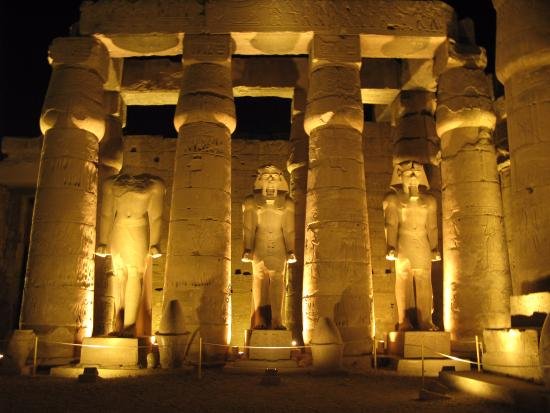
History, tickets, the famous Hypostyle Hall, and everything you need to know before visiting the largest ancient religious complex in Egypt.
Karnak or Khonsu Temple is not a single temple but a vast complex of temples, chapels, towers and sacred lakes built and expanded by more than 30 pharaohs over a period of about 2000 years. It is the largest ancient religious site in the world, and for many tourists around the world it is also the most exciting, in the best way.
This guide shows what to prioritize, how much time to dedicate, and how to avoid the most common mistakes for visitors.
Quick Facts About Karnak Temple
- Location: North of Luxor, on the east bank of the Nile River
- Construction: Construction and expansion spanned about 2000 years, from about 2000 BC to 100 AD
- Size: Covers about 200 acres — large enough to accommodate large tour groups within
- Main sections: Amun-ri area (largest and most visited section), Mut district, and Monto district
- Opening hours: Usually from 06:00 am to 06:00 pm, with evening sound and light show
- Average visit duration: 2.5 to 4 hours
A brief history worth knowing
Located in the southwest corner of the Karnak temple complex in Luxor, the Temple of Khonsu is dedicated to the moon god Khonsu, one of the most important deities in ancient Egyptian mythology. Its construction began during the reign of King Ramses III on the ruins of an earlier temple dating back to the Eighteenth Dynasty. Over time, improvements were added, especially during the reigns of King Nakhtenbo II and the Ptolemaic era.
This temple embodies the classical design of ancient Egyptian religious buildings. It is about 73 meters long and 29 meters wide, and consists of a series of sections with a distinctive architectural character. Upon entering, the visitor comes across the outer gate, or edifice, which leads to a ceremonial path surrounded by sphinx-like statues. Although time has reduced these statues to their bases, they still bear witness to the ingenuity of King Nekhtenbo I of the Thirty Dynasty.
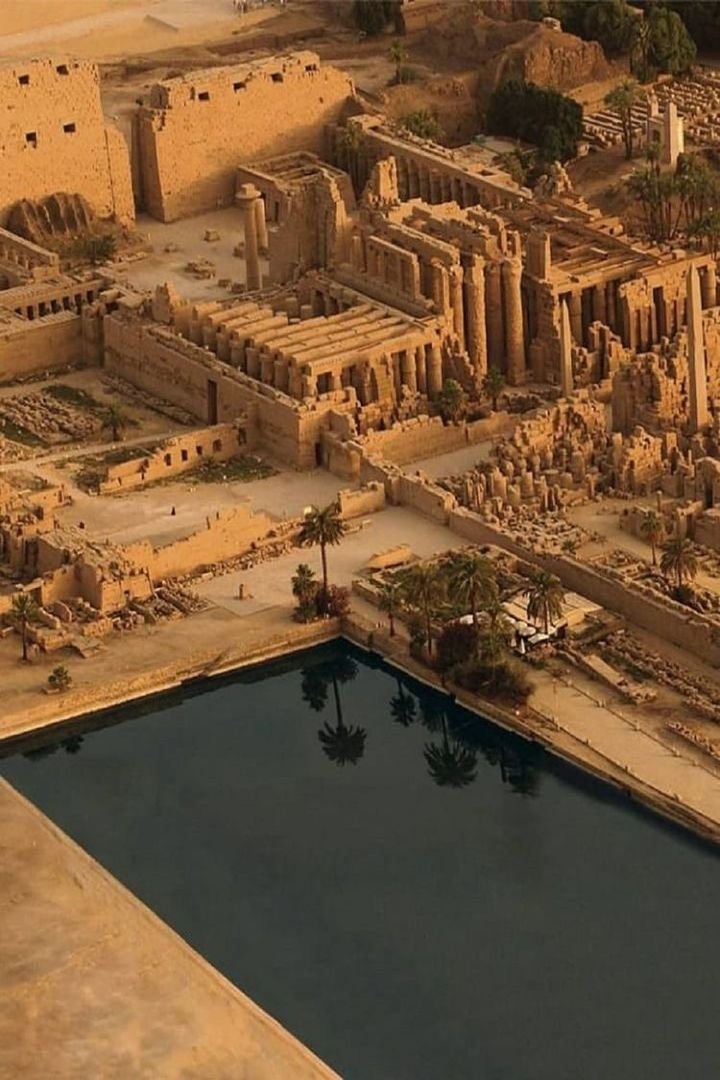
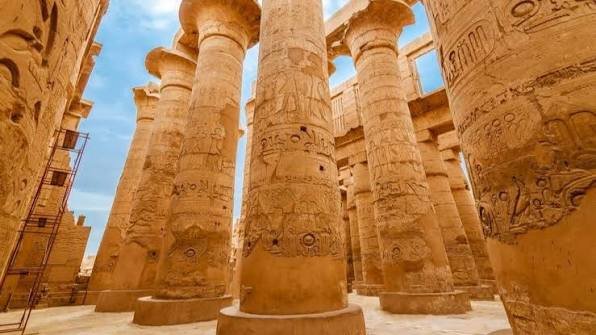
The most famous section is undoubtedly the Great Hypostyle Hall, a forest of 134 massive stone columns, some 69 feet high, originally built to support the ceiling and covered with intricate inscriptions that are still evident today. Standing between these columns is often described as one of the most visually striking moments of a complete trip to Egypt.
Karnak was also the ceremonial starting point for the ancient Opt festival, where statues of the gods were carried in a procession across the Sphinx Street to the Luxor Temple, the same procession route that connects the two sites today.
Best Time to Visit
Time of year: October through April provides the most comfortable conditions, with daytime temperatures generally ranging between 75–85°F. The summer heat, which often exceeds 100°F, makes shade-free stone courtyards difficult to enjoy by mid-morning.
Time of day: The earlier the morning the better (e.g. 08:00 am) before the daytime crowds of students are crowded. Karnak is a standard stop for large tour groups, and by mid-morning the Hepstyle Hall may feel noticeably crowded. Instead, the late afternoon sound and light show offers a cooler, less crowded and dramatically different experience.
How to get tickets
General admission tickets can be purchased at the entrance or booked online in advance via the official website of the Egyptian Ministry of Tourism and Antiquities, as current prices must always be confirmed before your trip.
A separate ticket is required for the Evening Sound and Light Show, a narrative show that showcases the history of the temple after dark. It is optional, but many visitors who are interested in learning about history and understanding ancient Egyptian civilization find it a worthwhile way to see the site from a literally different angle, as the lighting highlights architectural details that are easy to miss in daylight.
Karnak Temple Tickets: September 2026 Update
Comprehensive tickets allow entry to the Karnak Temple and the Open Museum. Adults: EGP 600 / Students: EGP 300
– Tickets for the Temple of Death in Karnak: Adults: 200 EGP / Students: 100 EGP
Free entry for children under 6 years old
You can book tickets from the official website of the Ministry of Tourism and Antiquities:
https://egymonuments.com/details/KarnakTemple
A shared ticket that covers both Karnak and Luxor Temple is sometimes available and is worth considering, as the two sites are usually visited together during their stay in Luxor.
How to get there from Luxor
Karnak’s location on the northern edge of Luxor makes it easy to reach:
- Taxi or Uber: A short and inexpensive journey from most hotels in the center of Luxor
- Walking: Possible from hotels closer to the north side of the city, although walks can be long and free depending on the season
- Horse-drawn carriage (Kalechi): a scenic, albeit touristy option — agree on the price in advance
- Guided Tour: Often compared to the Luxor Temple as a single half-day or full-day trail
What to expect when you get there
Due to the size of the crank, most visitors benefit from a rough mind map before arrival: the main visitor route passes through the first tower, through an open courtyard, to the Great Hall of Hepstyle, and then continues past several other columns towards the Holy Lake and the outdoor areas. Trying to see everything in one visit is rarely realistic , prioritizing the Hall of Hepstyle, the obelisks of Hatshepsut and Thutmose I, and the Holy Lake efficiently covering the highlights.
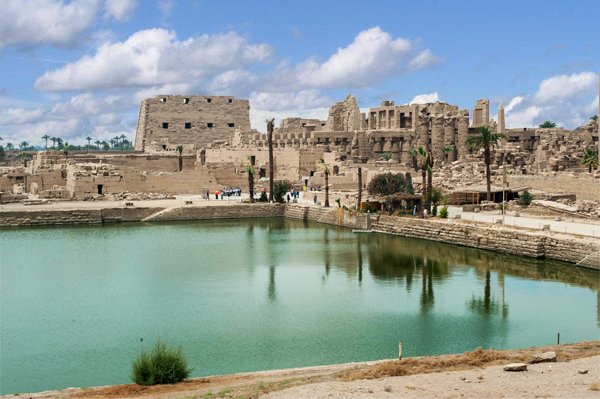
The sacred lake, which was used in ancient times for ritual cleansing by the temple priests, offers one of the best photographic angles of the surrounding towers and is considered a natural resting point in the middle of a visit.
There are vendors and informal guides near the entrance area, as are other key locations — continuing to walk is usually effective.
Practical Tips for American and European Travelers
- Dedicate more time than you think — Carnac’s size surprises most first-time visitors, and rushing diminishes the quality of the experience
- Wear comfortable toe-toed shoes; the location requires a large walk through uneven stones and sand
- Bring sunscreen — a hat, sunscreen, and sunglasses are essential due to the sun’s largely
- Consider a sound and light show if you enjoy the historical context of the survey, but be aware that it adds a separate ticket and an evening time commitment
- Combine the visit with the Luxor Temple on the same day, using the historical link between the two sites (Avignix Street) todeepen the experience where you can start with the Luxor Temple and then head to the Great Karnak Temple and continue the day to enjoy it
Frequently Asked Questions
Most visitors spend 2.5 to 4 hours, although history buffs or photographers may want longer due to the size of the site and the density of details.
A forest of 134 huge stone columns carved within the Amun-Ra district of Karnak, it is widely considered to be the most visually striking individual section of the entire complex.
Yes, remarkably — Karnak covers an area of nearly 200 acres, making it the largest ancient religious complex in the world, while Luxor Temple is relatively small and can be seen in less than two hours.
Many visitors enjoy it as a signature evening experience with dramatic lighting and narration, although it requires a separate ticket and is not necessary if you are short on time or budget.
The main trail alone covers a considerable distance, and exploring the outdoors adds a lot. Comfortable walking shoes are highly recommended.
2 thoughts on “Karnak Temple: The Ultimate Guide (2026)”