
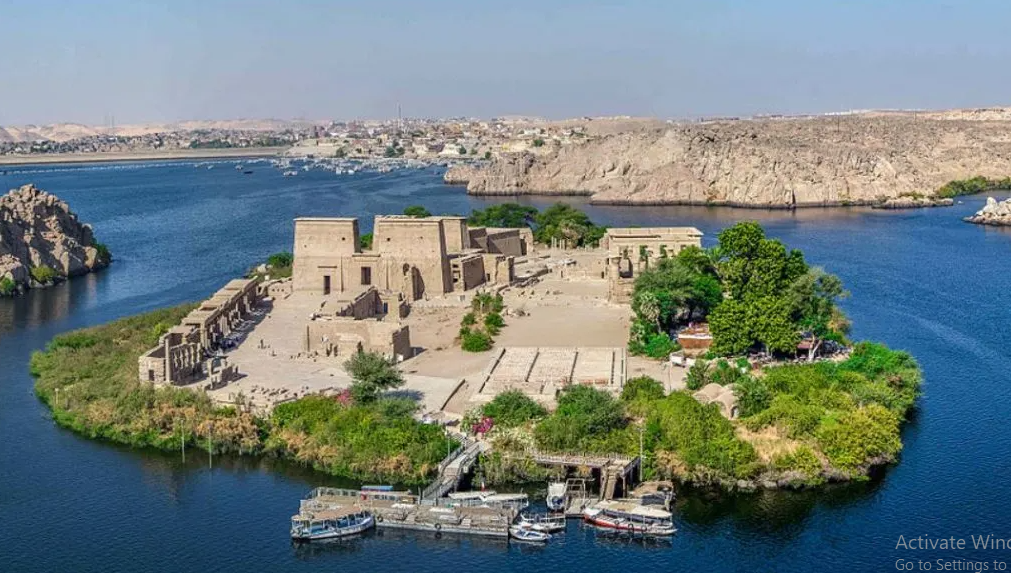
History, boat access, ticket information, and the story of why this island temple represents one of Egypt’s most beautiful and magnificent rescue operations
The Philae Temple is not located on the mainland at all; reaching it requires a short boat ride across the Nile to Agilkia Island, where the temple complex was painstakingly reconstructed following one of the most ambitious rescue operations in the history of archaeology. Dedicated to the goddess Isis, Philae combines breathtaking Nile scenery with a moving, true story of world heritage preservation, making it one of the most memorable stops on the southern Egyptian circuit.
This guide covers what to expect, how to get there, and why the boat ride itself is part of what makes this site special.
Quick Facts About the Temple of Philae
● Location: Agilkia Island, near Aswan; accessible only by boat
● Construction: Spanned from around 380 BC through the Roman period, continuing for several centuries
● Dedicated to: The goddess Isis, one of the most widely worshipped deities in the ancient Mediterranean world
● Significance: One of the last active ancient Egyptian religious sites; worship continued there until the 6th century AD
● Opening Hours: Typically 7:00 AM to 4:00 PM
● Average Visit Duration: 1.5 to 2.5 hours, including the boat crossing
A Brief History Worth Knowing
The Philae complex comprises numerous structures, most dating back to the Ptolemaic period (332–30 BC). Foremost among them is the temple begun by King Ptolemy II Philadelphus (285–246 BC) and dedicated to the goddess Isis, mother of Horus, the god of kingship. A relief in the *Mammisi* (or birth house)—where the birth of Horus was celebrated—depicts Isis nursing her son Horus amidst the marshes.
The Temple of Isis was one of the last ancient Egyptian temples to remain active, continuing operations until the reign of the Byzantine Emperor Justinian I (527–565 AD), who ordered the closure of all pagan temples. It was here that an Isis priest named Esmet-Akhom carved the final dated hieroglyphic inscription, dating to the late 4th century AD (394 AD). The temple was later converted into a Christian church, resulting in the deliberate destruction of many reliefs.
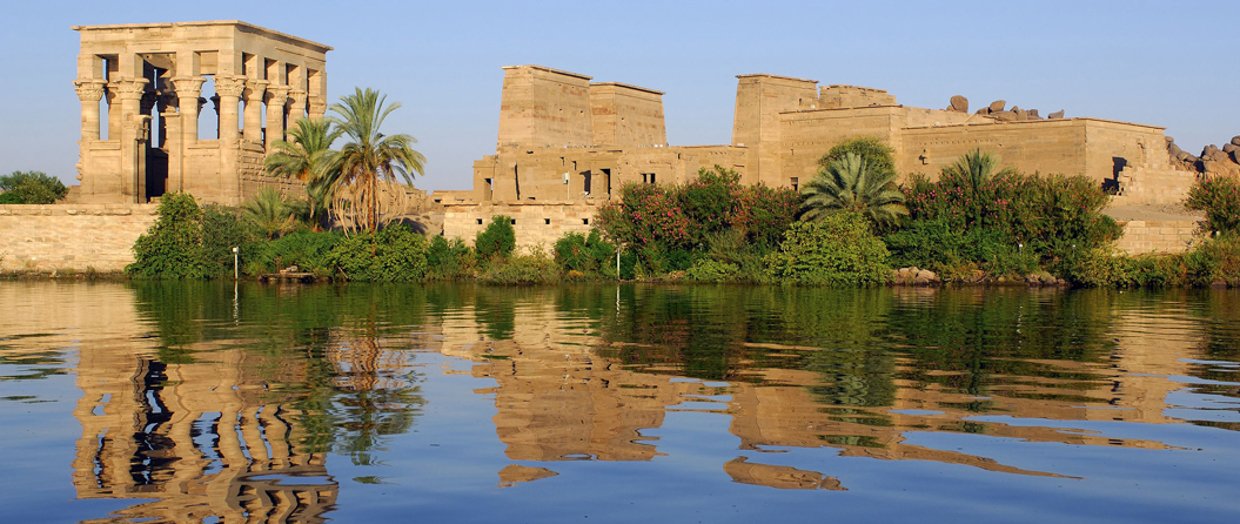
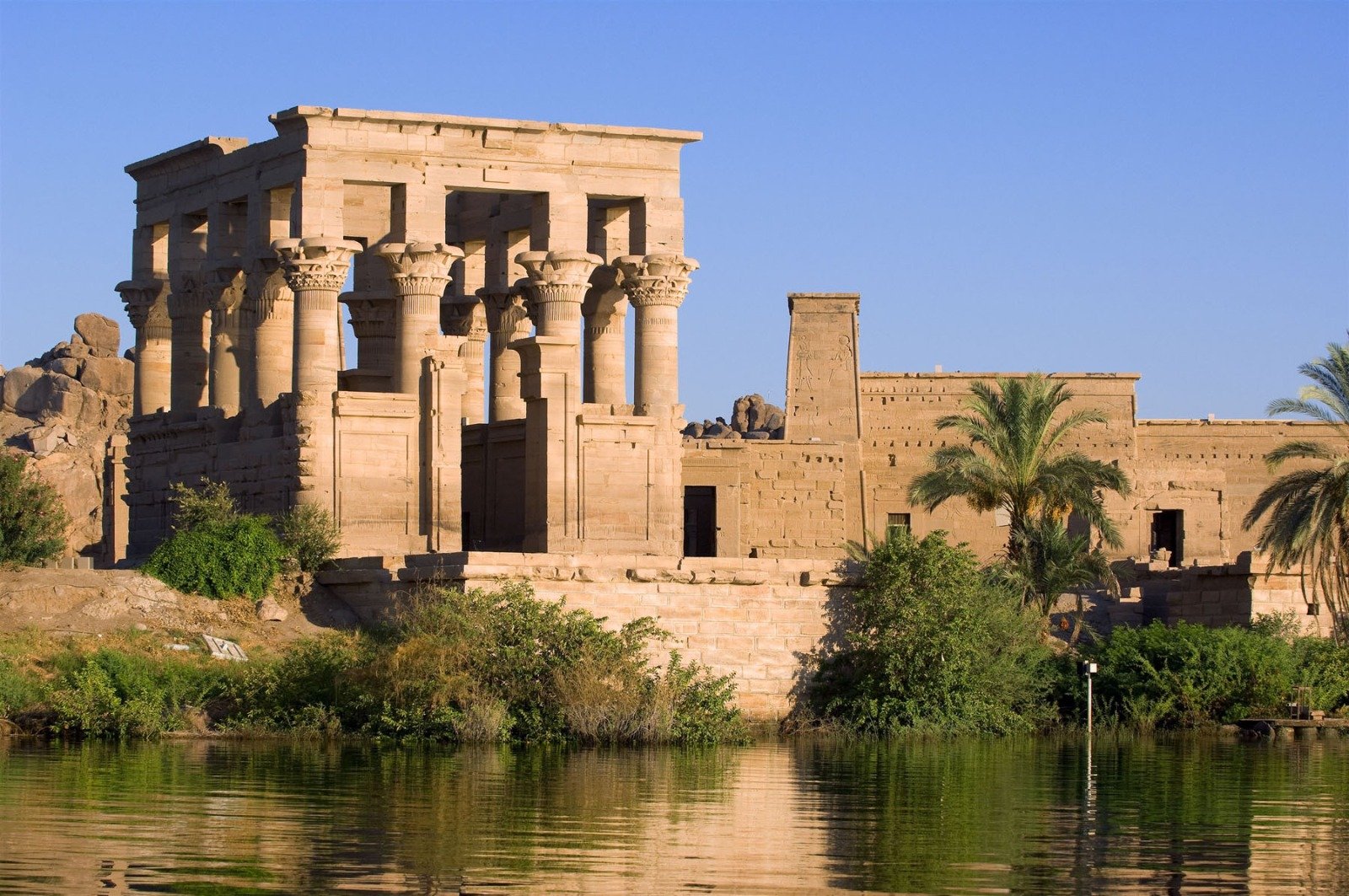
Nearby stands a temple dedicated to the goddess Hathor, built by both Ptolemy VI Philometor (180–145 BC) and Augustus, the first Roman emperor (30 BC – 14 AD). The “Kiosk of Trajan” (98–117 AD)—originally situated at the entrance to the Philae temple complex—remains standing proudly despite the loss of its roof; the orderly arrangement of its columns creates an aesthetic masterpiece that has long been described and depicted by travelers visiting the island. Isis is also a central figure in the rituals of this temple; the Emperor is depicted offering sacrifices to her, her husband Osiris, and their son Horus.
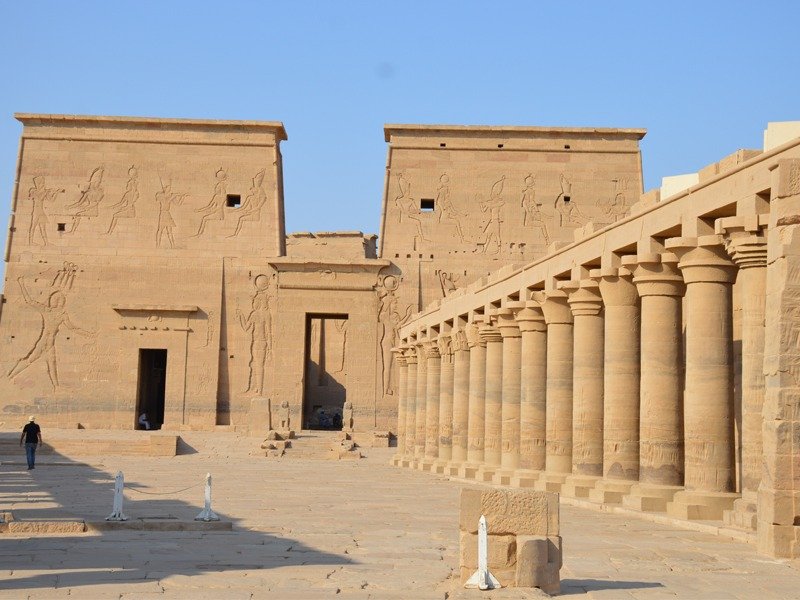
All these monuments were relocated from their original site on the island of Philae to the neighboring island of Agilkia during the UNESCO campaign to save the monuments of Nubia in the 1960s, in order to protect them from submersion caused by the construction of the Aswan High Dam.
Best Time to Visit
Time of Year: The period from October to April offers the most comfortable temperatures for outdoor boat trips and exploring the temple grounds, typically ranging between 75°F and 85°F. Aswan’s southern location makes the summer heat—which often exceeds 100°F—particularly intense.
Time of Day: Morning visits offer cooler temperatures and calmer waters for the boat crossing. Late afternoon is also a popular time, especially for photographers drawn to the warm light over the Nile; additionally, Philae hosts an evening Sound and Light Show for visitors wishing to experience the site from a different perspective.
How to Get Tickets and Reach the Temple
Unlike most Egyptian temples, visiting Philae requires two separate components: a temple entrance ticket and a short boat ride, as the site is accessible only by water.
● Temple tickets: Purchase at the dock area or in advance via the official website of the Egyptian Ministry of Tourism and Antiquities; prices are subject to change.
● Boat transport: A separate, small fee—usually paid to local boat operators at the dock—covers the round-trip crossing to Agilkia Island.
● Negotiating boat fares: Clearly agree on the total round-trip price before boarding, as informal negotiation is common practice here.
Ticket prices (updated September 2026):
Adults: 550 EGP / Students: 275 EGP / Children under 6: Free
Temple Panorama:
Adults: 200 EGP / Students: 100 EGP
Official Ministry of Tourism and Antiquities ticket booking website:
https://egymonuments.com/details/PhilaeTemple
How to get there from Aswan
● Taxi to the boat dock: Most visitors take a short taxi ride from central Aswan to the Philae boat dock, followed by a brief boat crossing to the island.
● Organized tour: Many tours in Aswan bundle taxi transfers, boat fares, and temple tickets into a single package, significantly simplifying logistics.
● Combine with other Aswan sites: Philae is often visited alongside the Aswan High Dam and the Unfinished Obelisk as part of a half-day itinerary, as the three sites are relatively close to one another.
What to Expect Upon Arrival
The boat ride itself usually takes about 10–15 minutes, offering stunning views of the Nile and the surrounding granite hills; it is a truly enjoyable experience rather than just a logistical necessity. Arriving by water—with the temple columns rising directly from the island—creates a first impression vastly different from that of land-based sites like Karnak or Luxor Temple.
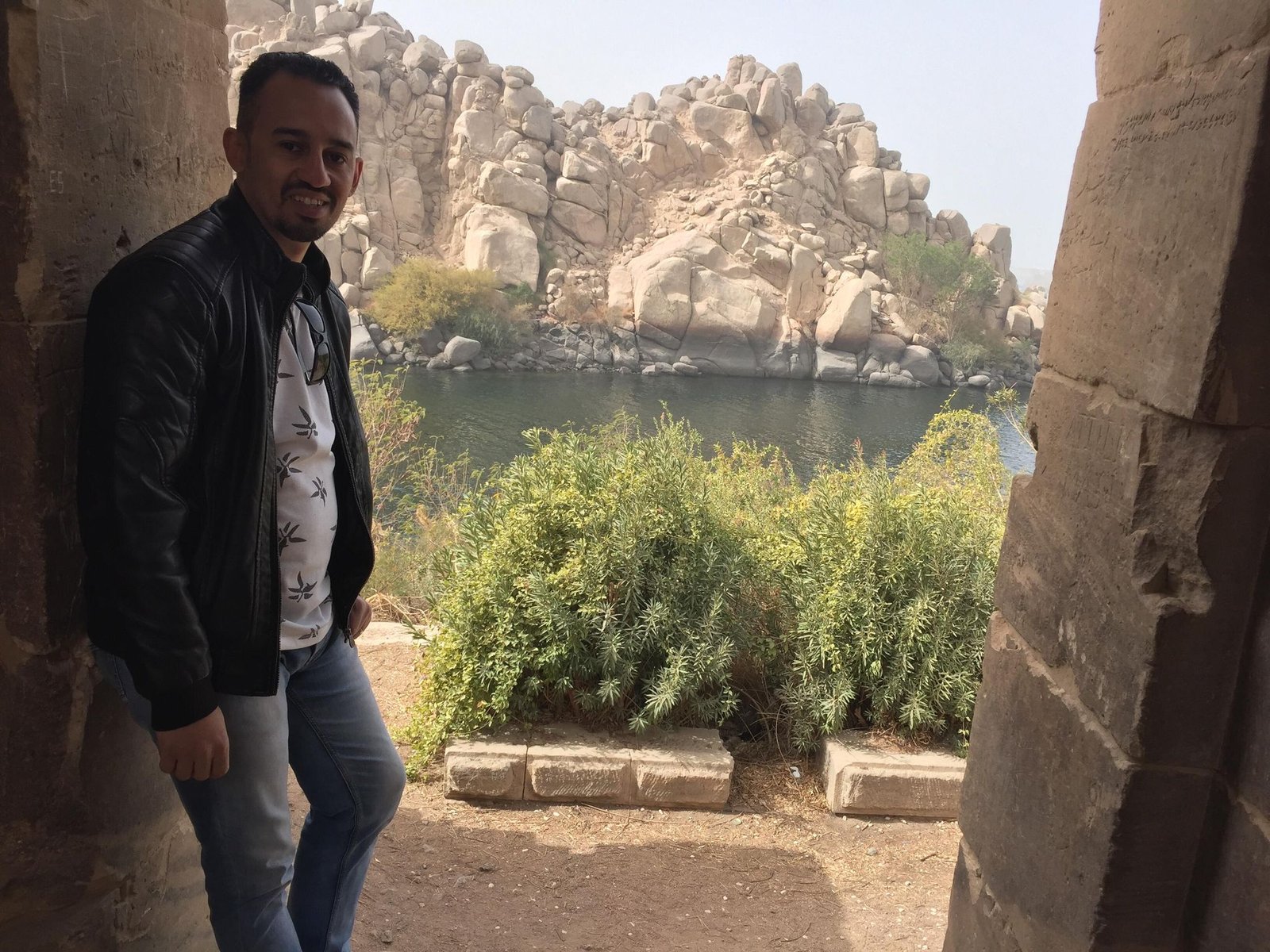
Once on the island, highlights include the First Pylon—richly carved with scenes of pharaohs and deities—and the Temple of Isis itself. Also notable is the smaller, elegantly designed Kiosk of Trajan; though largely open-roofed, it remains one of the most photogenic spots in all of Egypt.
Practical Tips for American & European Travelers
● Agree on the boat price before boarding; this is the most common source of confusion for first-time visitors.
● Bring sun protection, as there is limited shade during both the boat ride and the visit to the island itself.
● Consider the evening Sound and Light Show for a completely different atmosphere, especially if you are staying in Aswan for several days.
● Combine your visit with the Aswan High Dam and the Unfinished Obelisk to make the most of a single day in Aswan.
● A guide adds meaningful context here, particularly regarding the temple’s unique Greco-Roman construction and the remarkable story of its relocation in the 20th century.
FAQs
By boat only — a short 10–15 minute ride from a dock near Aswan to Agilkia Island, where the temple complex sits.
No, boat transportation is typically a separate fee paid directly to boat operators at the dock, in addition to the temple admission ticket.
The rising waters from the Aswan Dam and later the Aswan High Dam threatened to permanently submerge the original site. UNESCO led an international effort in the 1970s to relocate the entire complex to the nearby, higher-elevation Agilkia Island.
Most visitors spend 1.5 to 2.5 hours total, including the boat crossing and time exploring the temple grounds.
Yes, it’s commonly paired with the Aswan High Dam and the Unfinished Obelisk, all located relatively close together, making for an efficient half-day itinerary.