
History, ticket prices, the best time to visit, and everything you need to know before exploring one of the most fascinating ancient temples in Egypt.
Easiest museum to visit ever
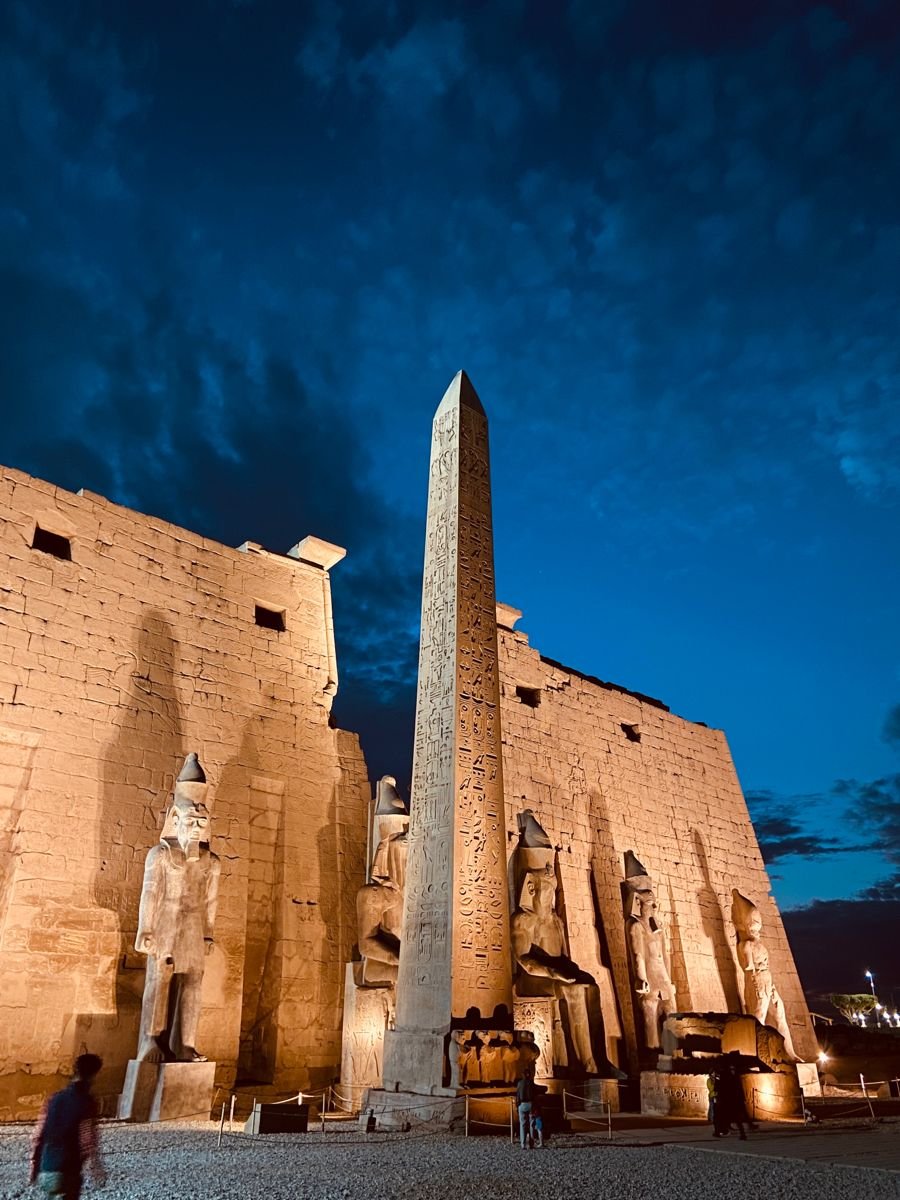
Unlike most ancient Egyptian temples hidden in the desert, the Temple of Luxor is located in the heart of the modern city of Luxor — which means you can walk from your hotel to a 3,400-year-old temple in minutes, and see its appearance beautifully lit up in the night sky. For American travelers who are building a flight schedule for Egypt, the Temple of Luxor is one of the most accessible and satisfying stops on the entire trip.
This guide explains everything you need for a smooth and timely visit.
Quick Facts About the Temple of Luxor
- Location: East Bank of the Nile, Luxor city center.
- Construction: Circa 1400 BC, with significant contributions from the pharaohs Amenhotep III and Ramses II
- Reason for creation: A dedication to the god Amun, his wife Matt, and their son Khonsu.
- Opening hours: Usually from 6:00 am to 08:00 pm and often extended in summer
- Average visit duration: 1.5 to 2.5 hours
A brief history worth knowing before you go
Luxor Temple, Ipet-resyt “Southern Sanctuary” to the ancient Egyptians, was so called because of its location within ancient Thebes (modern Luxor). It is located around three kilometers to the south of Karnak Temple, to which it was once linked with a processional way bordered with sphinxes. The oldest evidence for this temple dates to the Eighteenth Dynasty (c.1550–1295 BC).
Luxor Temple was not built by one single ruler. The oldest existing structure, a shrine, dates to the reign of Hatshepsut (c.1473–1458 BC). The core of the temple was built by Amenhotep III (c.1390–1352 BC).
Ramesses II (c.1279–1213 BC) made many additions to Luxor Temple. In front of the Great Colonnade, he built a peristyle courtyard and a massive pylon, a gate with two towers that formed the entrance into temples. In addition to many colossal statues, the pylon was also fronted by a pair of 25-meter-high obelisks made by this great king, but only one remains in place; the other has been at the Place de la Concorde in Paris since 1836..
How to get tickets
General admission tickets can be purchased at the entrance gate or booked online in advance via the official website of the Egyptian Ministry of Tourism and Antiquities. Prices change periodically, so it’s helpful to check current prices just before your trip rather than relying on outdated sources, sometimes a shared ticket is available that covers both the Luxor Temple and the Karnak Temple, and it may be worth considering, as most visitors see both during their stay in the city.
Ticket Prices September 2026 update
Other Nationality
Adult EGP 500
Student EGP 250
Childern Below 6 years Free
Opening Hours
All Days
Summer Working Hours:
from 06:00 am To 08:00 pm
Winter Working Hours:
from 06:00 am Last Entry 08:00 pm
Ramadan Working Hours:
from 06:00 am Last Entry 07:00 pm
Ministry of Tourism and Antiquities website for booking tickets
https://egymonuments.com/details/LuxorTemple
How to get there
The central location of the Luxor Temple makes it one of the easiest main sites to reach in all of Egypt:
- Foot: If you are staying in the center of Luxor, the temple is most likely within walking distance
- Horse-drawn carriage (Kalis): a common, albeit touristy, way to get there, agree on the price in advance
- Taxi or Uber: Reliable and cheap from anywhere in Luxor
- Nile Walk: The Corniche (waterfront walkway) leads directly next to the temple and provides a scenic entrance
Best Time to Visit Luxor Temple
Time of year: October to April brings moderate daytime temperatures, usually in the range of 75–85°F. The summer months typically exceed 100°F, making shade-free stone courtyards uncomfortable by midday.
Time of day: This is the only major Egyptian site where a night visit actually rivals a daytime visit. The temple is dramatically lit up after sunset, casting long shadows on the columns and statues , an atmosphere very different from the daytime crowds, and many seasoned visitors consider an evening visit to be the best experience overall.
What to expect when you get there
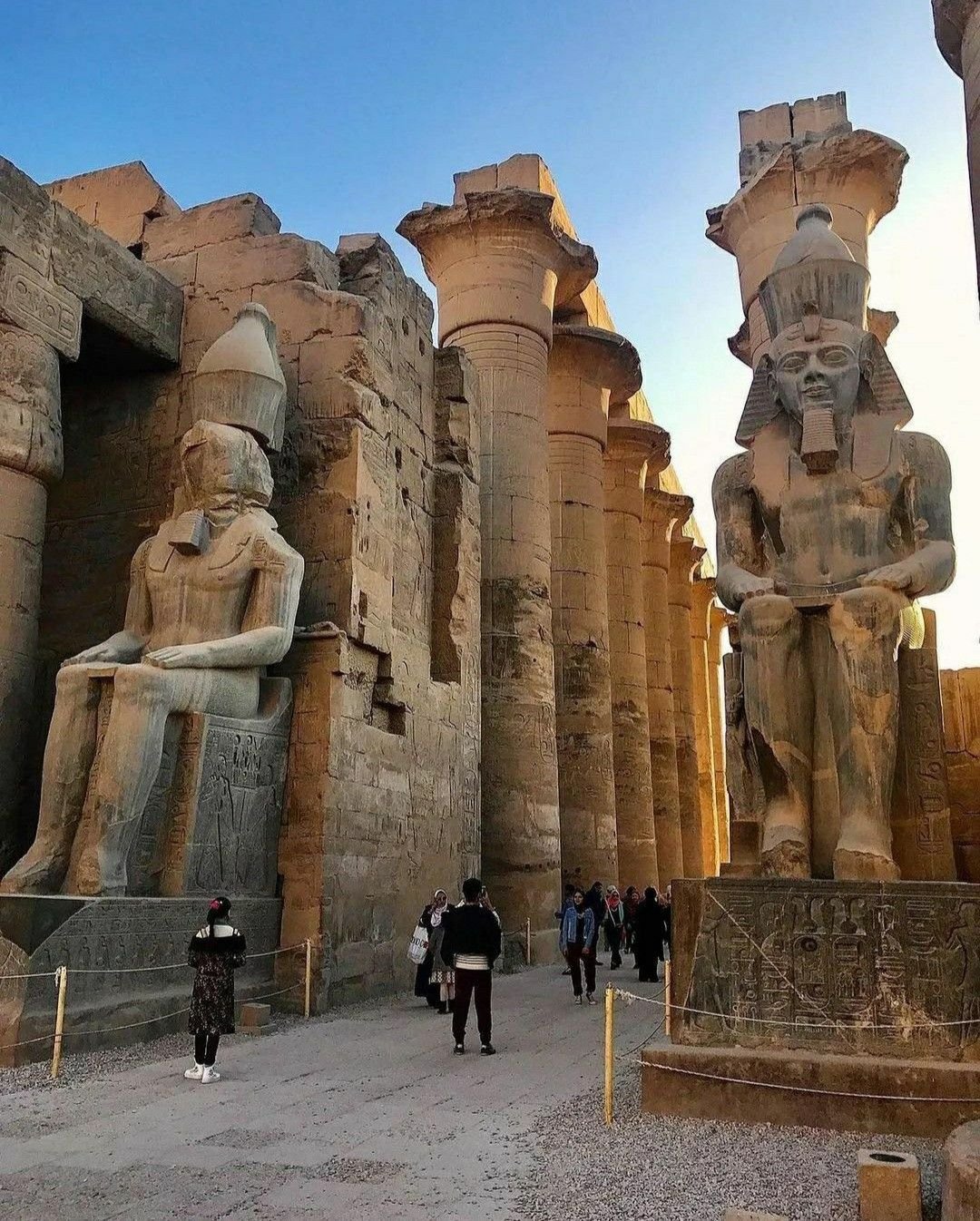
The temple is small compared to nearby Karnak, making it worth visiting even for visitors who are short on time or energy. Highlights include the Sphinx Street at the entrance (part of a restored procession route that used to connect the temples of Luxor and Karnak), the majestic statues of Ramses II, and the atmospheric mix of pharaonic columns standing next to the active mosque.
Lighting: If you are visiting at night, be aware that flash photography may be restricted in some sections to protect ancient inscriptions, check the signage on site.
Crowds: The Temple of Luxor tends to be less crowded than Karnak, especially in the early morning hours or after dinner, as many tour groups identify Karnak as a major day stop.
Is it safe to visit?
Located in the center of Luxor city right on the Nile and is a central and well-monitored tourist area, the vast majority of American and European visitors report no safety concerns. As with any tourist site, keep an eye on your personal belongings in busy areas and agree on any transfer prices or proof before committing.
Practical Tips for American and European Travelers
- Combine it with Karnak Temple on the same day if possible, a short walk or taxi ride connects the two, and most visitors do and a combined ticket may provide good savings
- Bring a light jacket for evening visits, as the temperatures drop significantly after sunset even in the warmer months
- Small Egyptian Pound Banknotes Useful for Tipping Guides or Kalish Drivers
- Modest attire is welcome, especially given the active activity of the mosque within the temple grounds
- The guide adds real value here , much of the importance of the Luxor Temple lies in the details (hieroglyphic inscriptions, multi-layered history) that would not be obvious without a professional tour guide.
Frequently Asked Questions
How long does it take to visit the Luxor Temple?
Most visitors spend an hour and a half to two and a half hours, although history buffs may want more time to appreciate the multi-layered inscriptions and architecture.
Is the Luxor Temple better at night or during the day?
Both offer distinctive experiences, but we prefer the night visit as the night lighting is attractive and beautiful with the banks of the Nile and with cooler temperatures of course , it makes the visit more enjoyable overall.
Is the Temple of Luxor related to the Temple of Karnak?
Yes, historically the two were connected to a procession corridor lined with sphinxes, parts of which have been restored and are still visible today.
Do I need a full day to see the Luxor Temple?
No, unlike Karnak, the Luxor Temple can be easily seen in less than two hours, making it easier to get close to other activities on the same day.
Are wheelchairs accessible at the Luxor Temple?
The main squares are relatively flat and walkable, although some areas have old, uneven stone roofs that may present challenges. It is advisable to check with the tour operator in advance for specific access needs.
1 thought on “Luxor Temple : The Complete Visitor Guide for 2026”