
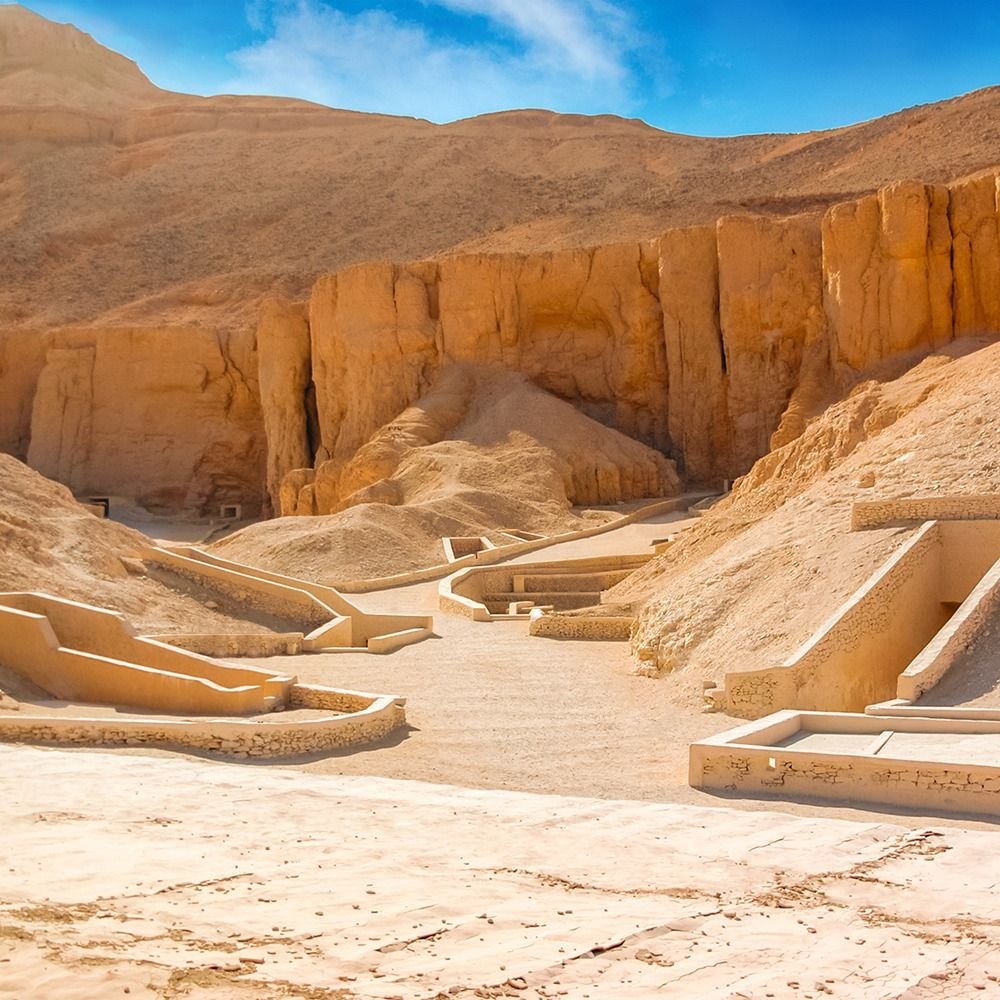
Ticket options, which tombs to choose, best time to visit, and practical tips for exploring Egypt’s most famous royal burial ground.
Hidden in the dry hills of Luxor’s West Bank, the Valley of the Kings is where nearly every major pharaoh of Egypt’s New Kingdom was buried — including the boy king Tutankhamun, whose nearly intact tomb became one of the greatest archaeological discoveries in history. Unlike the pyramids, there’s no dramatic silhouette visible from a distance here; the tombs are cut directly into the rock, hidden from view until you’re standing right above them. For American travelers, this site often ends up being one of the most emotionally striking parts of an Egypt trip — not because of size, but because of what’s inside: wall-to-wall hieroglyphics, vividly preserved color, and a level of detail that photos rarely capture well
Quick Facts About the Valley of the Kings
- Location: West Bank of the Nile, opposite Luxor city
- Active burial site: Roughly 1550–1070 BCE, during Egypt’s New Kingdom period
- Number of known tombs: 63 discovered so far, though not all are open to the public
- Most famous tomb: KV62, the tomb of Tutankhamun
- Opening hours: Typically 6:00 AM to 5:00 PM
- Average visit duration: 2 to 3 hours
A Brief History Worth Knowing Before You Go
The rulers of the Eighteenth, Nineteenth, and Twentieth Dynasties of Egypt’s prosperous New Kingdom (c.1550–1069 BC) were buried in a desolate dry river valley across the river from the ancient city of Thebes (modern Luxor), hence its modern name of the Valley of the Kings. This moniker is not entirely accurate, however, since some members of the royal family aside from the king were buried here as well, as were a few non-royal, albeit very high-ranking, individuals. The Valley of the Kings is divided into the East and West Valleys. The eastern is by far the more iconic of the two, as the western valley contains only a handful of tombs. In all, the Valley of the Kings includes over sixty tombs and an additional twenty unfinished ones that are little more than pits.
The site for this royal burial ground was selected carefully. Its location on specifically the west side of the Nile is significant as well. Because the sun god set (died) in the western horizon in order to be reborn, rejuvenated, in the eastern horizon, the west thus came to have funerary associations. Ancient Egyptian cemeteries were generally situated on the west bank of the Nile for this reason.
The isolated nature of this valley was yet another reason for its selection as the final resting place of the pharaoh. Tomb robberies occurred even in ancient times. The Egyptians were aware of this, having seen the a fate of the Old and Middle Kingdom pyramids, so they opted for hidden, underground tombs in a secluded desert valley. The first New Kingdom ruler that is confirmed to have been buried in the Valley of the Kings was Thutmose I (c.1504–1492 BC), the third king of the Eighteenth Dynasty. According to Ineni, the high official who was in charge of the digging of his tomb: “I oversaw the excavation of the cliff-tomb of his Person [the king] in privacy; none seeing, none hearing.”
Tutankhamun’s tomb, discovered by Howard Carter in 1922, stands out because it was found nearly untouched by looters — an almost unheard-of stroke of luck that gave the world an unprecedented look at royal Egyptian burial practices.
How Ticketing Works (This Part Trips People Up)
Ticketing here is more layered than most other Egyptian sites, and it’s worth understanding before you arrive:
- General admission: Covers entry to the valley and typically includes access to three tombs of your choosing from those currently open (rotation changes periodically for preservation reasons)
- Tutankhamun’s Tomb (KV62): Requires a separate, additional ticket — it is not included in general admission
- Other premium tombs (such as Seti I’s tomb, when open): May also require separate tickets due to their exceptional preservation and limited daily visitor numbers
Because ticket structures and included tombs change periodically, check the official Egyptian Ministry of Tourism and Antiquities website shortly before your visit for current pricing and which tombs are open that season.
Tickets Prices : September 2026 Update
Comprehensive tickets allow entry to the vally includes access to three tombs of your choosing from those currently open
Adults: EGP 750 / Students: EGP 375
Additional Tombs (require separate tickets)
Tomb of Tutankhamun (KV62): Approximately 700 EGP.
Tomb of Ramses V and Ramses VI: Approximately 220 EGP.
Tomb of Seti I (KV17): Approximately 2,000 EGP.
Free entry for children under 6 years old
You can book tickets from the official website of the Ministry of Tourism and Antiquities :-
https://egymonuments.com/details/ValleyOfKings
Best Tombs in the Valley of the Kings
Travelers often wonder about the best tomb in the Valley of the Kings, and while opinions differ, several tombs stand out for their beauty, scale, and historical importance.
1. Tomb of Seti I (KV17) – A Masterpiece
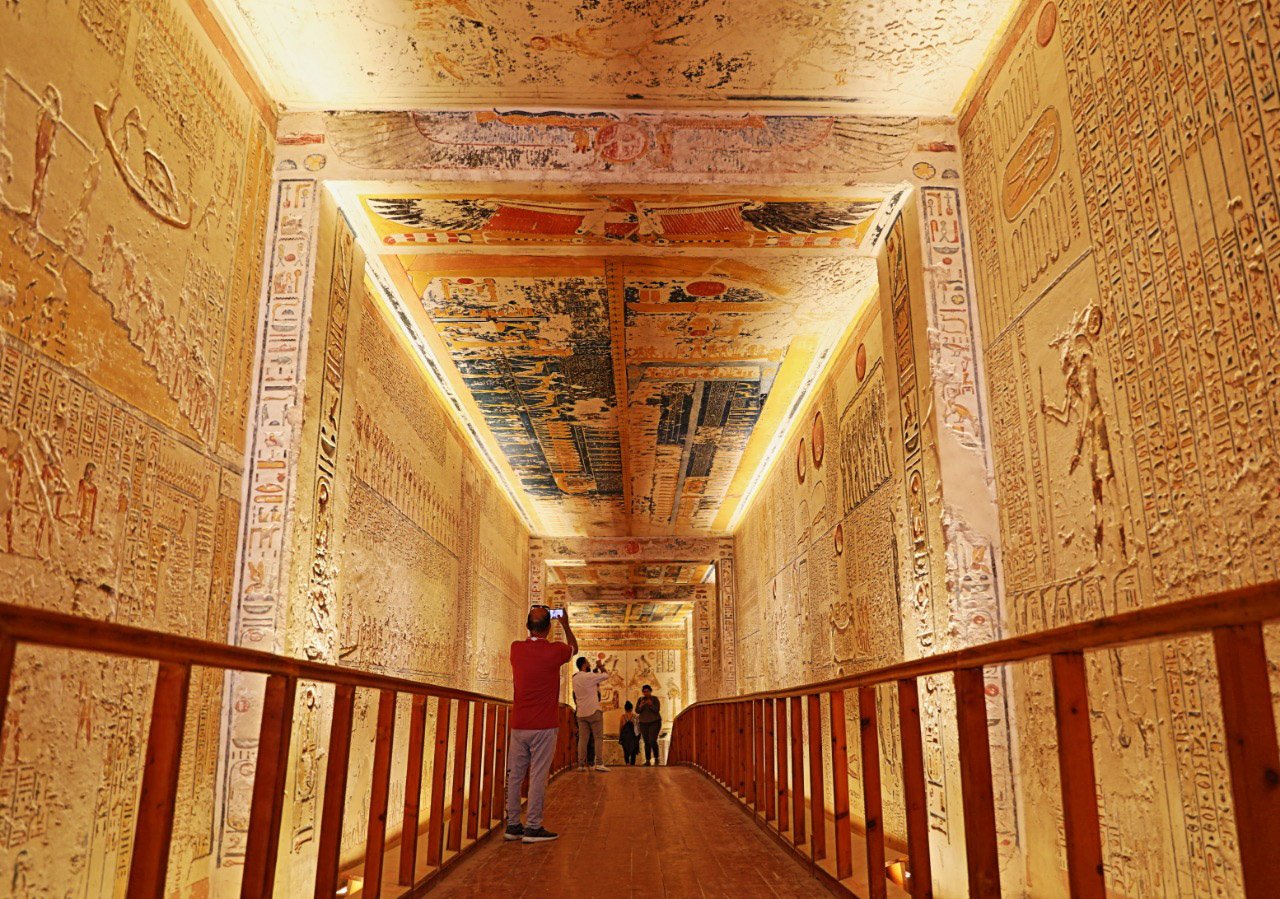
Widely considered the most exquisitely decorated tomb in the valley, KV17 is a vast corridor of detailed reliefs and celestial artwork. Its colors remain remarkably vivid. A special ticket is required, but enthusiasts consider it the valley’s crown jewel.
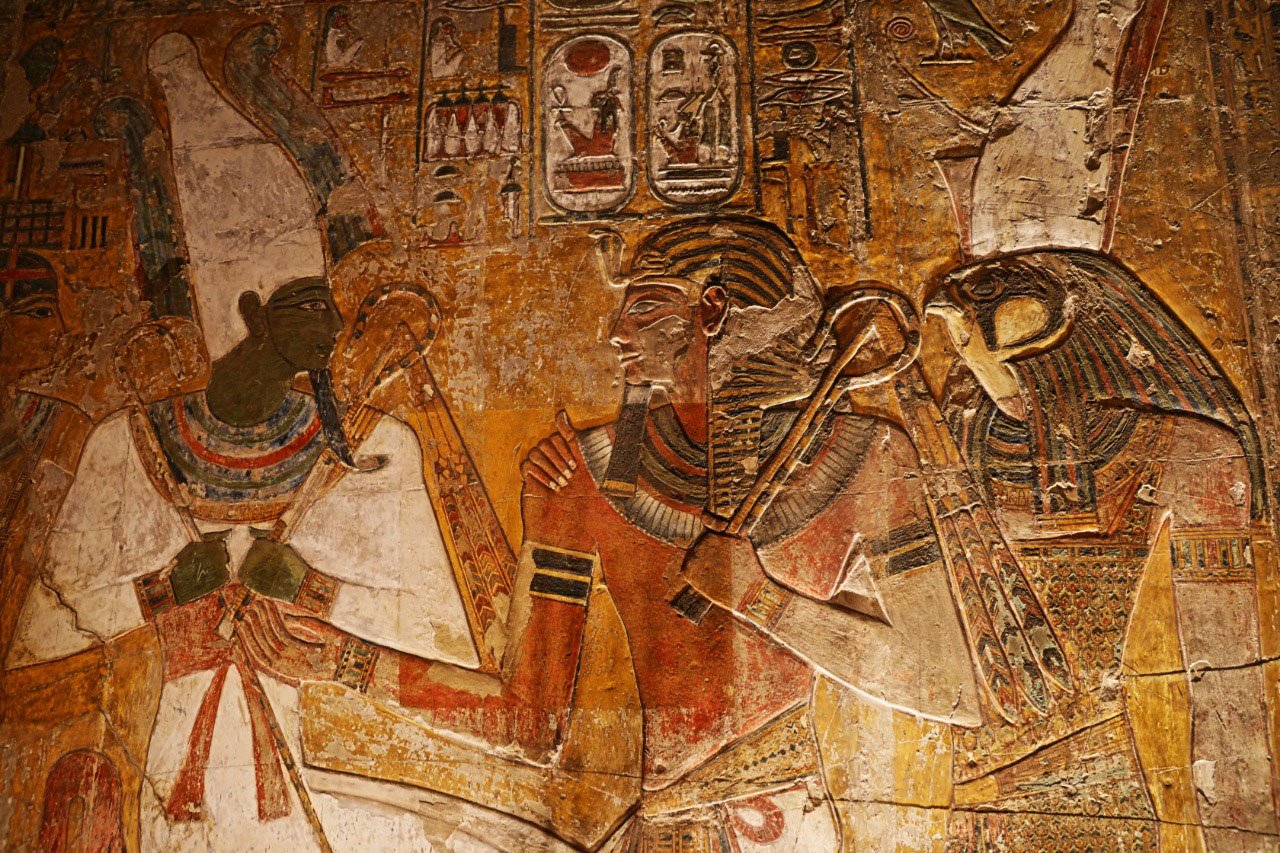
2. Tomb of Tutankhamun (KV62)
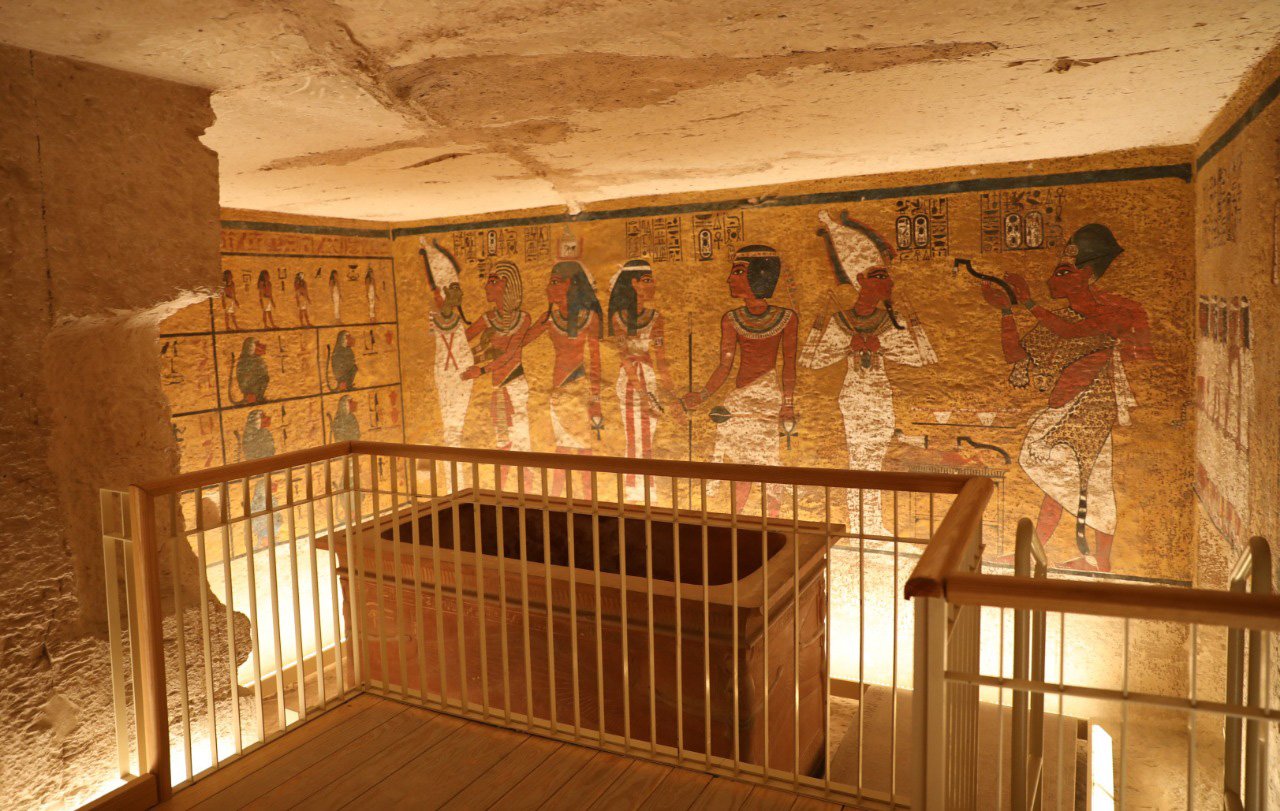
Though small compared to others, this tomb’s fame is unmatched. Discovered nearly intact in 1922, it yielded over 5,000 treasures. Today, visitors can enter the burial chamber and see King Tut’s actual mummy—an unforgettable experience.
3. Tomb of Ramses VI (KV9)
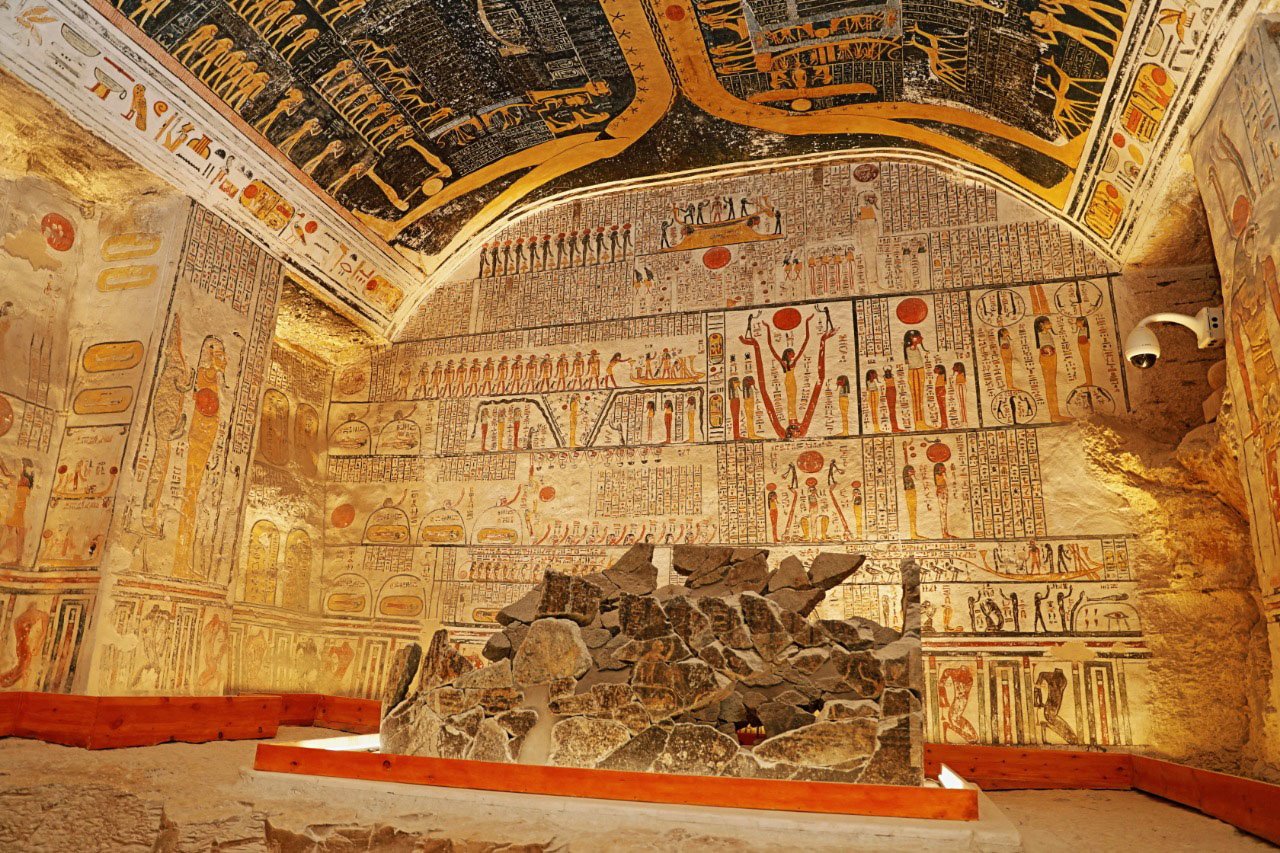
With its brilliant astronomical ceiling and extensive Book of Gates scenes, KV9 offers one of the most visually striking interiors in the valley.
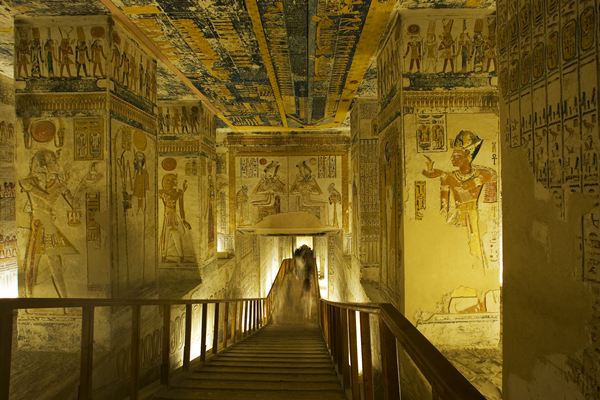
4. Tomb of Ramses IV (KV2)
Brightly painted, accessible, and spacious, this tomb is a favorite for its brilliant ceiling scenes and well-preserved corridors.
5. Tomb of Ramses II’s Sons (KV5)
One of the largest tombs ever discovered, KV5 contains more than 120 chambers. It was designed to house the sons of Ramses II and remains a massive, still-developing archaeological site.
How to Get There
The Valley of the Kings sits on Luxor’s West Bank, across the Nile from the main city:
- Private driver or organized tour: The most common and comfortable option, often combined with other West Bank sites like the Temple of Hatshepsut in the same trip
- Taxi: Can be arranged from central Luxor, typically crossing via the West Bank bridge
- Guided group tour: A convenient option that bundles transportation, tickets, and historical context together
Best Time to Visit
Time of year: October through April, with daytime temperatures generally in the 75–85°F range. The valley has essentially zero shade, and summer heat here (regularly above 100°F) makes midday visits genuinely difficult.
Time of day: Arrive as close to opening (6:00 AM) as possible. Tour buses tend to arrive in the mid-morning, and by 10:00 AM the valley can feel significantly more crowded and hot. An early start also means cooler temperatures for the walking involved between tombs.
What to Expect Once You’re There
Photography is generally not permitted inside most tombs to protect the delicate paintwork, though this varies by tomb and enforcement can differ — check current signage on-site. A tram typically shuttles visitors from the entrance area to the tombs themselves, as the visitor center sits a short distance from the valley floor.
Inside the tombs, expect steep descending corridors, dim lighting, and warm, still air — those with mobility limitations or claustrophobia should plan accordingly, as accessibility varies significantly between tombs.
Is It Safe to Visit?
The Valley of the Kings is a well-managed, heavily visited archaeological zone with a strong security presence, With more than a million visitors annually. Standard precautions apply: stay hydrated in the heat, follow marked paths, and keep valuables secure in the crowded tomb entrances.
Practical Tips for Western Travelers
- Bring more water than you think you need — there is no shade and limited shopping options once inside the valley itself
- Wear a hat and high-SPF sunscreen; the reflective limestone terrain intensifies sun exposure
- Comfortable walking shoes are essential for the uneven paths and tomb stairways
- Consider a licensed Egyptologist guide — the symbolism in the tomb paintings is dense, and a knowledgeable guide dramatically increases what you take away from the visit
- Pair it with the Temple of Hatshepsut, located nearby on the same West Bank, to make the most of the trip across the river
FAQs
How many tombs can you visit with one ticket?
General admission typically includes access to three tombs of your choosing among those currently open. Tutankhamun’s tomb requires a separate ticket.
Is Tutankhamun’s tomb worth the extra ticket?
Many visitors find the historical significance worth it, though the tomb itself is smaller and less visually elaborate than several others in the valley. It’s a personal call based on interest in the discovery’s history versus visual spectacle.
Can you take photos inside the tombs?
Photography is generally restricted inside most tombs to protect the ancient paintwork. Rules can vary by tomb, so check on-site signage before taking any photos.
How much walking is involved?
Moderate walking on uneven, sometimes steep terrain between tombs, plus stairways and ramps within the tombs themselves. Comfortable, closed-toe shoes are strongly recommended.
What’s the difference between the Valley of the Kings and the Valley of the Queens?
The Valley of the Kings holds tombs of pharaohs and some high officials, while the nearby Valley of the Queens holds tombs of queens and royal children, including the famously well-preserved tomb of Nefertari.
Written By
Khaled Abdallah
Continuing your West Bank exploration? Check out our complete guides to [the Karnak Temple](https://egyptwanders.com/karnak-temple-the-ultimate-guide-2026/), [Luxor Temple](https://egyptwanders.com/luxor-temple-the-complete-visitor-guide-for-2026/), to plan your full Luxor itinerary.